
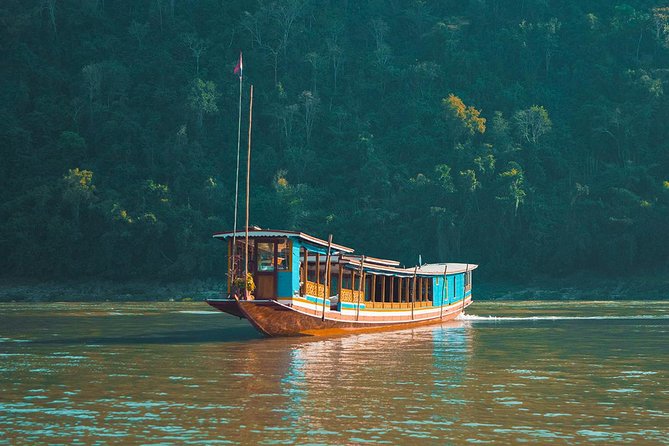
Pakbeng is a small riverside town that serves as the halfway stop on the famous Mekong slow boat journey between Luang Prabang and the Thai border town of Huay Xai. Nearly every traveller making this trip arrives in the early evening, spends one night, and departs again the next morning. In fact, it feels like about 99% of visitors follow this exact pattern. The entire town operates around this steady flow of overnight guests.
But what happens if you stay longer? What if you miss your boat, feel unwell, or simply decide to slow down?
That’s exactly what we did.
We arrived in Pakbeng aboard a more comfortable cruise and knew that our onward journey would be on the standard public slow boat. Rather than rushing ahead, we decided to pause for a full day. We needed time to map out the rest of our Laos itinerary, and Pakbeng seemed as good a place as any to regroup. After a quick wander through town and seeing the abundance of inexpensive guesthouses, we chose to extend our stay and explore at a slower pace.
Accommodation in Pakbeng – Where to Stay?
Pakbeng has no shortage of places to sleep. When the boats dock each afternoon, the pier bursts into life as guesthouse owners and hotel staff greet arriving travellers, hoping to secure bookings for the night. Because nearly everyone stays just one evening, the town is perfectly structured to handle this daily turnover.
Most accommodation options are simple guesthouses lining the main street. Rooms typically include a double or twin bed, a fan, and access to either a private or shared bathroom. Prices are generally very affordable if you walk in and ask directly. In our experience, online listings tend to show higher prices and only represent a portion of what is actually available. Many guesthouses simply aren’t listed online at all.
We found a straightforward double fan room with a shared bathroom for 100,000 kip (around £4.80 or $6). This was one of the cheaper options we saw, though most rooms ranged between 100,000 and 150,000 kip. The differences were minimal, and comfort levels were fairly similar across the board.
For travellers seeking something more upscale, there are two notably more luxurious options in town: The Sanctuary and Le Grand. These properties offer additional comforts such as swimming pools and on-site restaurants. If you book ahead at one of these hotels, they typically arrange transport between the pier and the hotel. However, if you’re staying in town itself, everything is easily walkable unless you’re carrying excessive luggage.
By mid-morning the following day, Pakbeng felt almost deserted. With the boats gone, the town returned to a quiet rhythm. Guesthouses were washing sheets and airing rooms, and locals seemed mildly amused to see us wandering around. It was clear that staying beyond one night is unusual — we likely looked like travellers who had “missed the boat.”
Things to Do in Pakbeng
While Pakbeng is small, it offers enough to fill a relaxed day. If you find yourself here longer than expected, there are several ways to pass the time.
The Pakbeng Viewpoint
Just above the pier at the entrance to town, you’ll see a large sign highlighting local attractions. One that immediately caught our attention was the Pakbeng Viewpoint.
From the main street, walk away from the pier past the rows of guesthouses and restaurants. Eventually, you’ll see a sign pointing left toward the viewpoint. Follow the dusty road as it climbs gently uphill, passing wooden houses and a primary school. You’ll come to a helipad — the views from here are already impressive — but you’re not quite at the top.
Behind the helipad, look for a steep concrete staircase. Climb these steps and you’ll reach the actual viewpoint, perched high above town between the main road and the Mekong River.
There are two viewing platforms. One faces downstream along the Mekong, showcasing the winding river cutting through lush hills. The other overlooks Pakbeng itself, with its rooftops and surrounding greenery. The panoramic scenery is genuinely rewarding and makes the short but steep walk worthwhile.
The site appears to have undergone construction or renovation at some point, as parts feel unfinished. However, there is no entrance fee or ticket barrier — simply walk up and enjoy the view.
Tip: The route is well signposted until you reach the helipad. Do not continue along the winding road — instead, turn around and climb the visible staircase behind you.
Wat Khokkhormingmoungkhoun
On the way to or from the viewpoint, you’ll pass a Buddhist temple overlooking the river: Wat Khokkhormingmoungkhoun.
The temple’s elevated position provides lovely views of the Mekong. Like all temples in Laos, visitors should dress respectfully, covering shoulders and knees. Even if you don’t enter, the ornate gateway and peaceful setting are worth a brief stop.
Pakbeng Museum
We attempted to visit the Pakbeng Museum, but unfortunately it was closed at the time. It appears to be a small local museum focusing on the history and communities of the region. If open during your visit, it may offer useful insight into the town’s background and cultural heritage.
Mekong Elephant Park
For animal lovers, Mekong Elephant Park may be of interest. We did not visit during our stay, as we prefer to thoroughly research elephant sanctuaries before supporting them. From available information, the park appears to house a small number of rescued elephants and does not offer riding, instead focusing on observation experiences. However, some higher-priced interactive options are advertised, so it’s best to research current practices before booking.
Sanctuary Viewpoint and Sunset Drinks
The Sanctuary hotel, located about a ten-minute uphill walk from town, has a bar and restaurant with exceptional views over the Mekong. Even if you’re not staying there, it’s possible to visit for a drink or meal.
Prices are noticeably higher than in town — a beer can cost around $3.50 — but the sweeping sunset views over the river are undeniably beautiful. If you feel like treating yourself, this is one of the best sunset spots in Pakbeng.
Eating and Drinking in Pakbeng
Despite its size, Pakbeng offers a wide range of dining options concentrated along the main street. You’ll find traditional Lao dishes such as laab and noodle soups, as well as familiar backpacker staples like fried rice, fried noodles, and Western breakfasts.
We enjoyed a generous serving of Pad Krapow for lunch, accompanied by a light vegetable soup. For dinner, we opted for Indian cuisine at a restaurant recommended by our guesthouse. The meal was hearty and satisfying. Prices in Pakbeng can feel slightly elevated compared to other Lao towns, largely because restaurants rely heavily on the nightly wave of travellers.
Budget-conscious travellers should head down to the pier area in the evening. Street vendors sell grilled meats, sandwiches, pastries, and snacks. These stalls also reopen early the next morning, making them ideal for picking up provisions before boarding the slow boat.
Tip: You can often pre-order sandwiches in the evening and collect them in the morning for your onward journey.
As for nightlife, options are limited. There are a couple of bars listed online, but openings can be inconsistent. That said, nearly every restaurant serves Beer Lao, and some have small bar areas at the front where travellers gather in the evenings.
Leaving Pakbeng
Most travellers depart Pakbeng by boat. The slow boat heading downstream to Luang Prabang typically departs at 9:30am, while the upstream boat toward Huay Xai leaves around 8:30am.
Tickets are usually purchased on the morning of departure directly on the boat. Arriving early is advisable to secure a comfortable seat. The fare is typically around 150,000 kip (approximately £7.20 or $9) for either direction.
Other Ways to Leave Pakbeng
While the slow boat is the most famous route, it’s not the only option. Buses connect Pakbeng to destinations such as Muang Xai (also known as Oudomxay or Oudomxai — the city goes by multiple spellings). From there, travellers can continue onward to other parts of northern Laos.
The bus stop is located outside of the main town, roughly a thirty-minute walk away, so plan your departure time accordingly.
Final Thoughts
Pakbeng exists largely because of the Mekong slow boat route. Its economy revolves around one-night stays, with guesthouses, restaurants, and shops catering to the steady stream of travellers passing through.
Yet if you find yourself here for longer — whether due to illness, a missed boat, or a conscious decision to slow down — you’ll discover that Pakbeng has its own quiet charm. A scenic viewpoint, a peaceful temple, riverside sunsets, and simple local eateries can easily fill a relaxed day.
Sometimes, missing the boat isn’t such a bad thing.
Thank you for reading